August 13, 2026 18:43
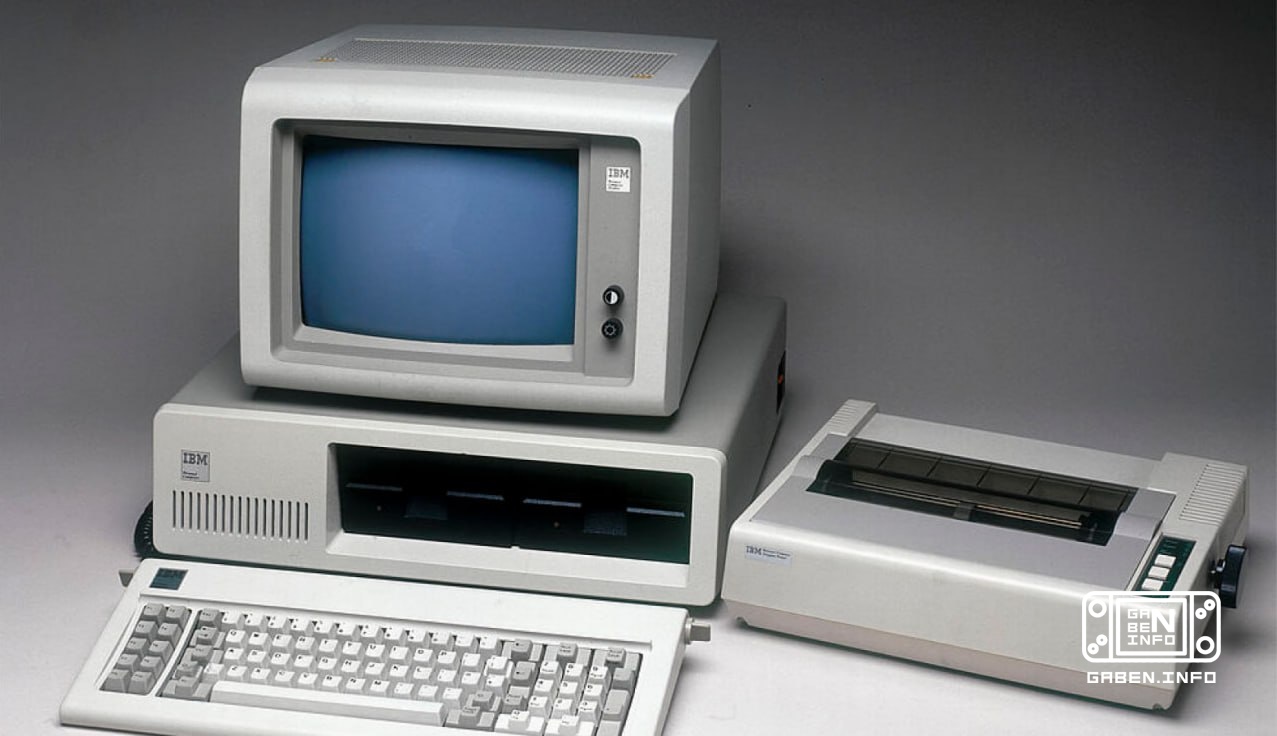
August 12 a unique date in the IT world: 45 years ago, the first mass personnel from IBM and MS-DOS appeared.
August 12 a unique date in the IT world: 45 years ago, the first mass personnel from IBM and MS-DOS appeared.
• In the 1970s, IBM focused mainly on the corporate market, believing that limited demand for PCs would not allow it to build a serious business. However, the rapid rise in popularity of the Altair 8800, Commodore PET, Sinclair Mk14 and Atari 400/800 personal computers, which Apple was outpacing with its products, forced large corporations to move. In 1980, IBM began developing its own desktop PC, and on August 12, 1981, the IBM PC 5150 was introduced to the public.
• The main goal of IBM's management was to create a compact and versatile workforce that would be fast and efficient to use in large enterprises, small businesses, and even at home, if desired and with sufficient resources. The core of the IBM PC 5150 was the Intel 8088 processor, running at 4.77 MHz, with an operating memory of 16 to 64 KB, which could be increased by installing an additional expansion charge of up to 256 KB.
• IBM could not find a compact computer hard drive, and it did not have enough power, so the machine used two 5-inch drives as a storage unit.
• The first IBM PC was equipped with an IBM 5151 monochrome display, but later the IBM 5153 colour monitor was added to the production lineup, while the computer supported two video standards simultaneously: MDA and CGA. The first provided high-resolution monochrome text output, but could not display anything more, and the second produced colour graphics and medium and low-resolution text.
• PC DOS 1.0 and CP/M-86 were used by staff as operating systems. However, on the same day, August 12, 1981, another landmark event took place that literally turned the computer industry upside down. Namely, Microsoft released the unknown MS-DOS operating system, which was mass-installed on IBM-compatible PCs. MS-DOS 1.0 itself was largely renamed 86-DOS, which Bill Gates bought for $75,000 from developer Tim Patterson of Seattle Computer Products.
• The computer was very well received by the public. Even before its official release, computer editions admired the stated PC characteristics, and after the machine went on sale there were many rave reviews, the authors of which literally admired the engineering solutions, performance and capabilities of the IBM PC. Already in its first year, more than 130,000 copies of this computer were sold, and as it was developed on an open platform, it soon appeared numerous clones, which were produced by Compaq, Eagle Computer, Handwell Corporation and other companies.
• The IBM PC (5150) has become one of the most popular PCs in the world, and the IBM PC has become the standard.
# Different #game #PC
• In the 1970s, IBM focused mainly on the corporate market, believing that limited demand for PCs would not allow it to build a serious business. However, the rapid rise in popularity of the Altair 8800, Commodore PET, Sinclair Mk14 and Atari 400/800 personal computers, which Apple was outpacing with its products, forced large corporations to move. In 1980, IBM began developing its own desktop PC, and on August 12, 1981, the IBM PC 5150 was introduced to the public.
• The main goal of IBM's management was to create a compact and versatile workforce that would be fast and efficient to use in large enterprises, small businesses, and even at home, if desired and with sufficient resources. The core of the IBM PC 5150 was the Intel 8088 processor, running at 4.77 MHz, with an operating memory of 16 to 64 KB, which could be increased by installing an additional expansion charge of up to 256 KB.
• IBM could not find a compact computer hard drive, and it did not have enough power, so the machine used two 5-inch drives as a storage unit.
• The first IBM PC was equipped with an IBM 5151 monochrome display, but later the IBM 5153 colour monitor was added to the production lineup, while the computer supported two video standards simultaneously: MDA and CGA. The first provided high-resolution monochrome text output, but could not display anything more, and the second produced colour graphics and medium and low-resolution text.
• PC DOS 1.0 and CP/M-86 were used by staff as operating systems. However, on the same day, August 12, 1981, another landmark event took place that literally turned the computer industry upside down. Namely, Microsoft released the unknown MS-DOS operating system, which was mass-installed on IBM-compatible PCs. MS-DOS 1.0 itself was largely renamed 86-DOS, which Bill Gates bought for $75,000 from developer Tim Patterson of Seattle Computer Products.
• The computer was very well received by the public. Even before its official release, computer editions admired the stated PC characteristics, and after the machine went on sale there were many rave reviews, the authors of which literally admired the engineering solutions, performance and capabilities of the IBM PC. Already in its first year, more than 130,000 copies of this computer were sold, and as it was developed on an open platform, it soon appeared numerous clones, which were produced by Compaq, Eagle Computer, Handwell Corporation and other companies.
• The IBM PC (5150) has become one of the most popular PCs in the world, and the IBM PC has become the standard.
# Different #game #PC