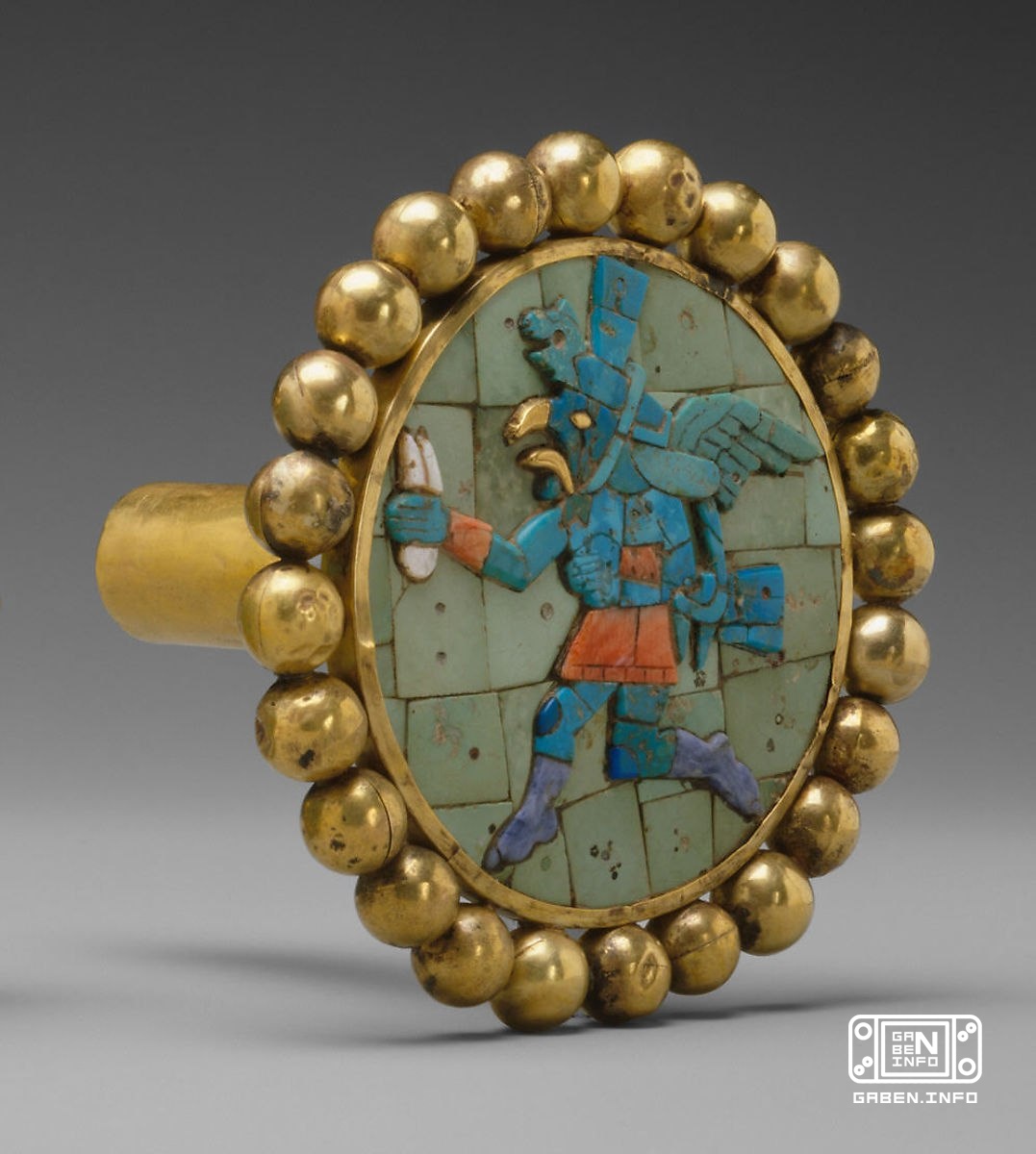
Pair of ear ornaments depicting winged runners, made of gold and inlaid with turquoise, sodalite and shells, Peru, Moche culture, c. 400–700.n.e.
These are not earrings, their size is more than almost 10 cm, the diameter of the mini-mosaics of more than 140 pieces is approx.8 cm. They depict two almost perfectly symmetrical images of winged runners wearing bird masks.Ritual running, whether depicted as a human or as a creature with zoomorphic features, is one of the most common themes in late Moche pottery.
Since writing in the modern sense did not exist in South America during this period (until the arrival of Europeans in the 16th century), the exact meaning of these images remains unknown.However, the use of rare materials and a high level of artistic processing clearly indicate the high status of their owners.
Turquoise was brought here from deposits in northern Chile, and Spondylus shells were imported to the region from warmer waters off the coast of northern Peru and Ecuador.The exact location and circumstances of the discovery are unknown; the artifacts were donated to the museum from a private collection.
Museum Metropolitan, inv.No. 66.196.41, New York, USA
Mysteries of the story with Bald Comrade
#pre-Columbian_cultures
#art #game